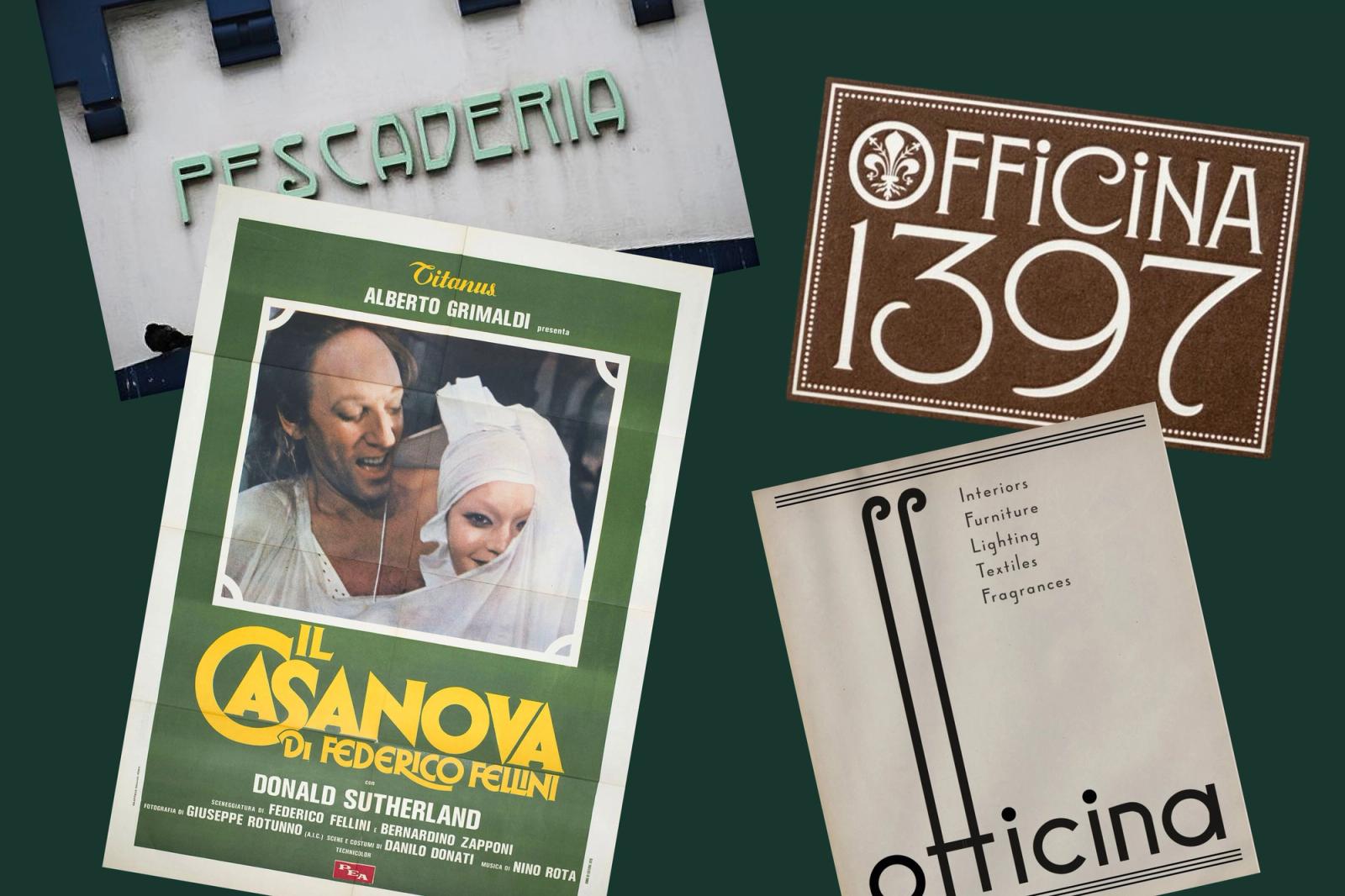
We sat down with Dallas’ cultural anti-hero, former citywide music critic and arts editor, and music supervisor at Defensive Listening LLC, Chris Mosley, to talk about how he approaches the art of the playlist, working with Tractorbeam for our events, and what he thinks is the best soundtrack/playlist of all time. You may feel the need to read this with a side of fava beans and a nice bottle of Chianti.
Tractorbeam: So, what is a music supervisor, and who should consider working with one?
Chris Mosley: That is a deeply philosophical question. In a perfect world, everyone would have a music supervisor. When you hear the same songs playing at every type of coffee shop from here to Canada, there's a phantom indie chart where you hear roughly the same 200 coffee shop songs. But a music supervisor is self-explanatory insofar as, yes, this person is in charge of the aesthetic and the research. Some places are so complicated that you have to program down to basically the minute. So, from 8 to 9:30 a.m., there's a certain, like, vibe of music, and then from 9:30 to 11:30, there's a different one. I really appreciate this. I appreciate the kind of psycho business owners who really care and want it curated almost down to the minute. But it could also be, in relation to film, or anywhere where you're gonna hear music in public, more or less.
TB: We obviously use you for a lot of our events and clients who want this atmospheric curation. How do you balance your own taste with what's asked of you for a project?
CM: There are certain things that I have a line about. I think every music supervisor has their own kind of internal… list of boundaries. And, usually, I'm trying to find a sort of three-way balance between what's best for the project and what I think would be ideal. If it were my dream, I'd program it exactly to my specifications, and then you wanna put a little, like, drop of crowd-pleasing in it. I think, to some extent, there are these universal hits, too, that everyone almost seems to love. DJs know this very well. I would say a DJ is almost a type of music supervisor, and that job crosses over a lot. Being able to read an environment even when you're not there. I think that's the hardest part, that you don't get to just babysit these spaces all the time. But I do a lot of boots-on-the-ground research, and I go to different, really silly places, like a pickleball-themed bar, but also a really high-end hotel lobby. Depending on the ask, there's some crossover between all this stuff.
TB: Truuuue. Where do you find new music, and how do you find new music? Is it just listening to suggestions, or is it perusing other friends' playlists? How do you do that?
CM: Well, without jumping down the rabbit hole too much, I should say my whole life in music has been trying to go against the grain of the built-in publicist world, where all the labels are hiring these people to kind of harass you every day and send you new music all the time.
Now, when I was younger, and a lot more arrogant, I think, I would just delete all of those emails every morning. I would purposely fly blind. But over the years, I've come back around on it because it is their job. They have some very rare gems that most people are never gonna hear, and I try to go out of my way to click all of those, especially if they're in Spanish, especially if they're, like, French. If it's something being pushed to me from, like, an overseas publicist, I'm like, “okay, I wanna check this out.” And then from there, you can kind of go down a different rabbit hole because they provide you all the info there, right? Like, they'll tell you the producer, they'll tell you everything. So from there, you can maybe go find 10 other things you weren't aware of happening in the, let's say, underground Paris techno scene or something. And I just kind of collect those things. A lot of what I do is very analog, old school, just still going out and buying old magazines and, you know, things that maybe I overlooked. But in the end, no matter how cool you want to be with it, it still has to be available on one of the streaming services and available for the client.
In fact, I've nearly offered to do this for you all before–downloading specific things off YouTube and stringing them together in a recording app because there's an Alexandria digital library of stuff that is not available on Spotify, Apple Music, or anything.
TB: That's so true. I listen to YouTube a lot because there are a lot of things that got taken off Spotify, Apple Music, and now they're gone, especially punk and other outsider genres.
CM: Hell yeah.
TB: Especially, like, old-school punk stuff, and the in-between between new wave and post-punk, a lot of that is on there, because it's not streaming. Or bands come off and on streaming - I think the band Pylon goes on and off a lot.
CM: Yes.
CM: I love Pylon, and that's, you know, they were reissued by DFA at one point, which has probably had something to do with them coming off and on. I want to say the big-time music supervisors who work, which I've sort of been adjacent to those who work out of LA and things like that, a label will have a music supervisor whose entire job is just to push the label's entire back catalog to use their songs in new Netflix shows and things like that. And I guess that's where I get a little bit cynical about the business sometimes. It's like, “Okay, are these 600 songs from this catalog really the greatest thing ever, or are you just being paid to push it?” You know?
TB: It's like, is it a Coca-Cola restaurant or a Pepsi restaurant?
CM: Right, yeah, and so, I think a lot of the job is trying to differentiate between passion and paid. I don't want to call it a soft advertisement, but there's a lot of money in it. It feels a little bit payola-y sometimes. And I try to, as much as I can, go against all of that in-network stuff.
TB: Yeah. Okay, one day we'll have a pre-recorded track, okay, Chris? One day.
CM: Yeah, no, I would love to. I build them in REAPER, and I think I told you this, maybe, there was one business that wanted great speeches from history and sports. Like, Lou Gehrig or Babe Ruth speaking. And they wanted all of this stitched together so that it played on a loop in a men's sauna and restroom, like, locker room. And then, for the ladies' sauna area, we ended up using spoken word poetry. And so I had to stitch all of these speeches together, and it took me months. What I think would surprise people is that it's a lot more complicated than that.
TB: I agree, and it's similar to collaging. It could take a while, trying to figure out what fits together, so I understand. What's a creative decision you've made recently that worked out?
CM: I think having the live DJs at the Tractorbeam Ink Temple gallery opening. They didn't play exactly what was on the playlist; the ask was to spiritually match it, and I couldn't believe how well it worked out. And the interesting part was that every single DJ out of, like, 4 DJs basically all chose a Chris & Cosey song. These people are all very, very different. Like, one's older, one's younger. We're all in very different creative worlds. But that's the great thing about music, there's always this one kind of connective thread through everything.
TB: The vibes were immaculate that night. We were very pleased with the whole event, and the art combined with the music really made it a great night.
So, I know you're also a professional critic - does this lead you to being more discerning in taking on, or selective with your own work?
CM: Sometimes I think, in a way, the projects I like the most are the ones that wouldn't necessarily speak to me, because I like a challenge. I like trying to challenge myself to not just wake up and plug in the same thing. One thing I'm really, really adamant about is trying to never repeat a song from playlist to playlist, if possible. Like, that's something I take super seriously.
TB: It's like trying not to wear the same clothes every day.
CM: Yeah.
TB: Is there a style… since you say that you kind of like a, like a challenge, is there a style of music that's off-limits to you?
CM: Mmm. You know, I always say there's a Nina Simone for every genre, right? I think there’s almost no completely irredeemable genre. Like, I can usually find that thing or that person. I don't think screamo or pop punk should be played in bars. That's just my take. And when it happens, I will spend a lot of money at the jukebox, pushing back and trying to put Al Green, or Orange Juice. I have a small list of what I would call “jukebox terrorism.”
TB: What's a weird space you've found inspiration in?
CM: See, I'm trying to answer this very carefully. I mean, to me, I think almost like the origin of this art, beyond, let's say, the jukebox from the early 20th century, would be the hair salons of the '80s. And I don't think that's unusual, I think it's kind of expected. I've gone through old-school guys’ CD books, with just hundreds and hundreds of mixes. And I just remember getting to the end of one and being like, where did this come from? And they were like, “Oh, he was a hairstylist.” You could probably write an entire book about how the gay salons of the '80s were, kind of, maybe the most important music-curation space.
TB: I think you touched on this before, but what is the most challenging part about putting together a playlist?
CM: I think just having a real desire not to be obvious or rely on crutches, you know? It's like… not to knock my goth compatriots too much, but you go to a lot of goth nights, and you kind of hear the same 15 to 50 songs or something.
TB: Bauhaus is always in there.
CM: Yeah, we could go a whole night without hearing any of the hits. What a hit was in 1982, of course, is not the same today, so, yeah. I think the biggest challenge is just trying not to do the most obvious thing that comes to mind right away.
TB: Is there a perfect playlist or soundtrack? If so, what is it?
CM: There's a lot of great soundtracks for bad movies, Playlist or soundtrack. I think I'm most impressed sometimes when a movie or a soundtrack can make me like a song I didn't like. That's always mind-blowing to me because it reframes it for you. See, it's so hard to separate the art from the film from the music. I'm just like, just because you like the movie, that doesn't mean that the soundtrack's the greatest thing. Man, that is such a difficult question. Let me think about it.
TB: My friend's dad said that he always hated the song “Tiny Dancer” until he saw Almost Famous. He was like, “I thought that song sucked when it first came out.”
CM: Oh, okay, that's funny. You know, Jonathan Demme was a true subversive. And he's almost single-handedly responsible for Q Lazarus’ “Goodbye Horses” being as well-known as it is. Even though I'm not that crazy about The Silence of the Lambs, that soundtrack has The Fall, and I want to say Savage Republic. He really so expertly weaved in all of this super brilliant music, and just happened to do it for this huge blockbuster horror film. I kind of think it's one of the great all-time Trojan horse moves. I cannot believe he got some of that incredibly obscure LA underground post-punk. Like, he was really the man for taking his super esoteric taste and pushing it into Academy Award-winning mainstream. I've always been really amazed by people who can remain cool and be successful, you know? I feel like usually you get to choose one.
TB: So maybe Science of the Lambs is probably one of… or at least one of the most perfect.
CM: Yeah. Yeah, I would put that way up there.