I've been doing digital marketing since people connected on Myspace, added photos to Flickr, and searched on AOL. And I can't tell you how many times I've heard that SEO is dead.
Social media was going to kill it. Mobile apps were going to kill it. Voice search was definitely going to kill it. Now, word on the street is artificial intelligence is here to finish the job.
And yet, here we are… optimizing away.
At Tractorbeam, we've spent years building websites, developing search strategies, and helping clients navigate changes in how people discover brands. I'll admit, this one feels a little different. Not in a doomsday, robots-are-taking-over kind of way, but because we're having to consider what happens when the visitor digesting your website's content isn't actually a person.
First, can we stop declaring SEO dead?
Girl, I'm over it.
SEO has always had a simple objective: make sure people can find your brand when they're looking for something relevant.
Today, that means everything from site architecture and content strategy to user experience, local search, and understanding increasingly complex searches (and, yep, still backlinks).
Despite what LinkedIn's latest AEO evangelist might tell you, those things still matter.
Take Cortland, one of the country's largest and coolest multifamily operators. We help manage the digital presence of more than 200 apartment communities, each with its own locations, amenities, floor plans, and available units.
To help potential residents find their perfect home, we created apartments.cortland.com so they can discover that information through searchable pages organized by location, price, bedrooms, and amenities. While you're checking it out, find yourself an apartment and move in next month. Yolo!
Now consider someone asking ChatGPT to find a two-bedroom apartment in Buckhead under $2,500, with a dog park and covered parking.
Suddenly, all that underlying information becomes even more important.
Turns out, a lot of the work we've been doing for traditional search also puts us in a better position for AI search. Funny how that works.
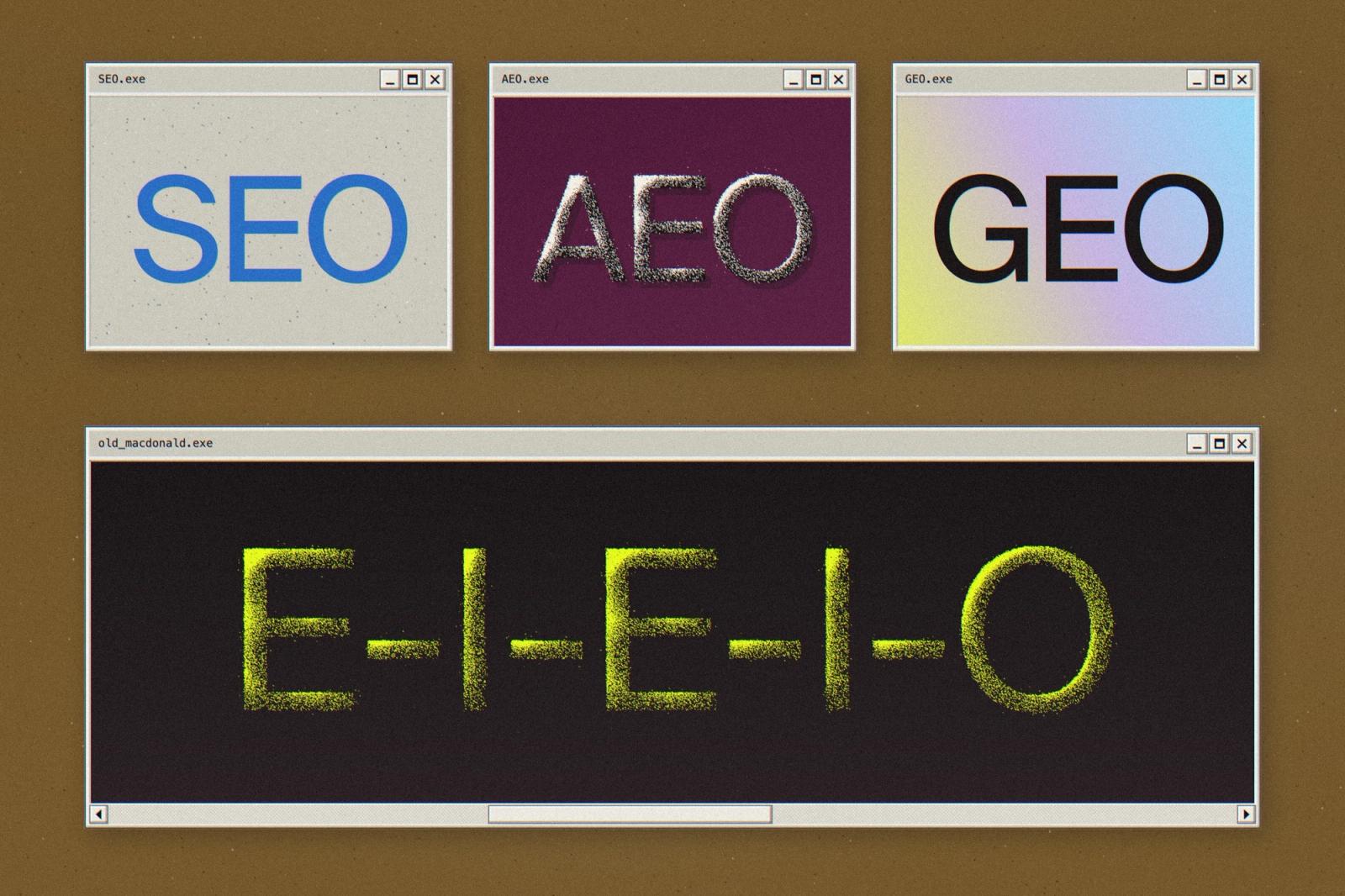
AEO. Because we always need another acronym.
Answer Engine Optimization. Generative Engine Optimization. AEO. GEO. E-I-E-I-O. Pick your favorite.
Traditional search has largely been about getting your website in front of someone. AI-powered search increasingly focuses on delivering the information itself.
You just bought an apartment (thank you very much); now let's plan a vacation.
Instead of searching for "luxury resorts near New York City," someone might ask ChatGPT for a historic property within two hours of Manhattan, with a great spa, incredible food, and good wine.
If you've ever been to Mohonk Mountain House, you know it's a compelling answer. After all, it was just named the #1 resort in the Northeast & Mid-Atlantic and #13 in the world in the Condé Nast Traveler Readers’ Choice Awards.
We’ve partnered with Mohonk since 2016. In recent reporting, organic revenue increased 15% year over year, with paid search revenue growing 27%, all while AI search revenue continues to grow.
With their new website, we're also making sure the information that makes Mohonk unique, from its historic property and spa to its dining and experiences, is accessible to systems helping travelers make decisions.
AEO doesn't replace traditional SEO. It gives us another reason to do it well.
And there's no magic button guaranteeing ChatGPT will recommend your brand. Anyone selling you that guarantee deserves a healthy dose of skepticism.
Your website has a new audience. And they're not all friendly.
We've spent years designing websites around human behavior. Navigation, user experience, conversion funnels, calls to action.
But bots have always been part of the equation.
Googlebot crawls websites for search results, while AI systems might retrieve information to answer someone's question or collect content to train their models. AI agents are even beginning to navigate websites and complete tasks on someone's behalf.
Very different purposes, and not necessarily ones we should treat equally.
We recently encountered a client website migration where security settings were blocking legitimate search crawlers. Can you tell it wasn't developed by Tractorbeam? Umhummm.
The website looked perfectly fine to human visitors, but Google couldn't properly access some of the content. That's a problem, regardless of how beautiful the website is.
As AI discovery grows, knowing which bots can access your website becomes increasingly important. Not every bot deserves a warm welcome, either. There's a difference between helping someone discover your business and collecting your entire website to train an AI model.
Knowing who's knocking, and deciding who gets in, is becoming part of the job.

What happens when nobody clicks?
We've talked about zero-click searches for years, but AI is taking that conversation somewhere new.
What happens when someone asks an AI assistant for a recommendation, gets a perfectly good answer, and never visits your website?
Was that a successful marketing interaction? If a tree falls in the woods…
Potentially.
Take Casa de Campo, another longtime Tractorbeam client. When we started working together in 2017, the resort averaged roughly 25% occupancy. Through years of marketing, audience development, digital execution, and a partnership with an incredible PR firm, that's grown to approximately 90% average monthly occupancy, with eight consecutive years of record annual revenue.
All before anyone started selling AEO services.
Now imagine someone asks an AI assistant for the best luxury golf resorts in the Caribbean.
If Casa de Campo gets recommended, that's valuable exposure, even without a website visit. Maybe they search for the resort later, call their travel advisor, or book through another channel.
Here's something we're already discussing with clients: website traffic is going down while revenue is going up. Not everywhere, obviously, and I'm not suggesting AI deserves all the credit. But it's happening enough that we're reconsidering how much weight we put on traffic.

We're monitoring AI referrals, citations, brand mentions, and branded search behavior. Still, an AI mention isn't a booking, and visibility doesn't automatically translate into performance.
We need to understand these interactions without inventing metrics that look great in a presentation but tell us nothing about the business.
Please don't build a website exclusively for robots.
I can see you right now, dreaming up AEO strategies, AI-optimized content packages, and methodologies promising to get your brand recommended by Claude and ChatGPT.
Some of that work will be valuable. But I'm willing to bet a good portion will just be SEO with a worse logo and a higher retainer.
The reality? Much of what makes a website useful to AI is what should have made it useful to humans and search engines all along.
Clear content. Logical structure. Accurate information. Technical accessibility. Demonstrable expertise. A brand that actually has something interesting to say.
Our work across hospitality, multifamily, retail, and other industries keeps reinforcing that point.
A hotel needs accessible information about its experiences and amenities. An apartment community needs accurate pricing and availability. A retailer needs useful product information.
None of that should come at the expense of the human experience. The bots aren't your customers.
So, where does that leave us?
We've spent two decades figuring out how to get people to websites, and now technology could make some of those visits unnecessary.
That's a strange thing to wrap your head around when you've built a career in digital marketing.
I'm not worried about SEO disappearing, and I'm certainly not ready to declare AEO the next great marketing revolution.
We're still figuring out how AI platforms choose recommendations, how consistently brands appear, and how to measure the impact.

We've spent two decades figuring out how to get people to websites, and now technology could make some of those visits unnecessary.
In the meantime, we'll keep doing what we've always done at Tractorbeam: building strong technical foundations, creating content worth finding, experimenting, and measuring what we can.
I'm sure someone will come up with another acronym for all of it.
Is WTF taken?